This site uses cookies to store information on your computer.

Some of these cookies are essential, while others help us to improve your experience by providing insights into how the site is being used. For more detailed information on the cookies we use, please see our Cookie Policy.

Home
»
Switch & Go Dinos
»
Switch & Go Dinos Armour Up Dragon T-Rex
3-8
YEARS

This is a carousel. Use Next and Previous buttons to navigate. Or, jump to a slide by selecting one of the thumbnails.

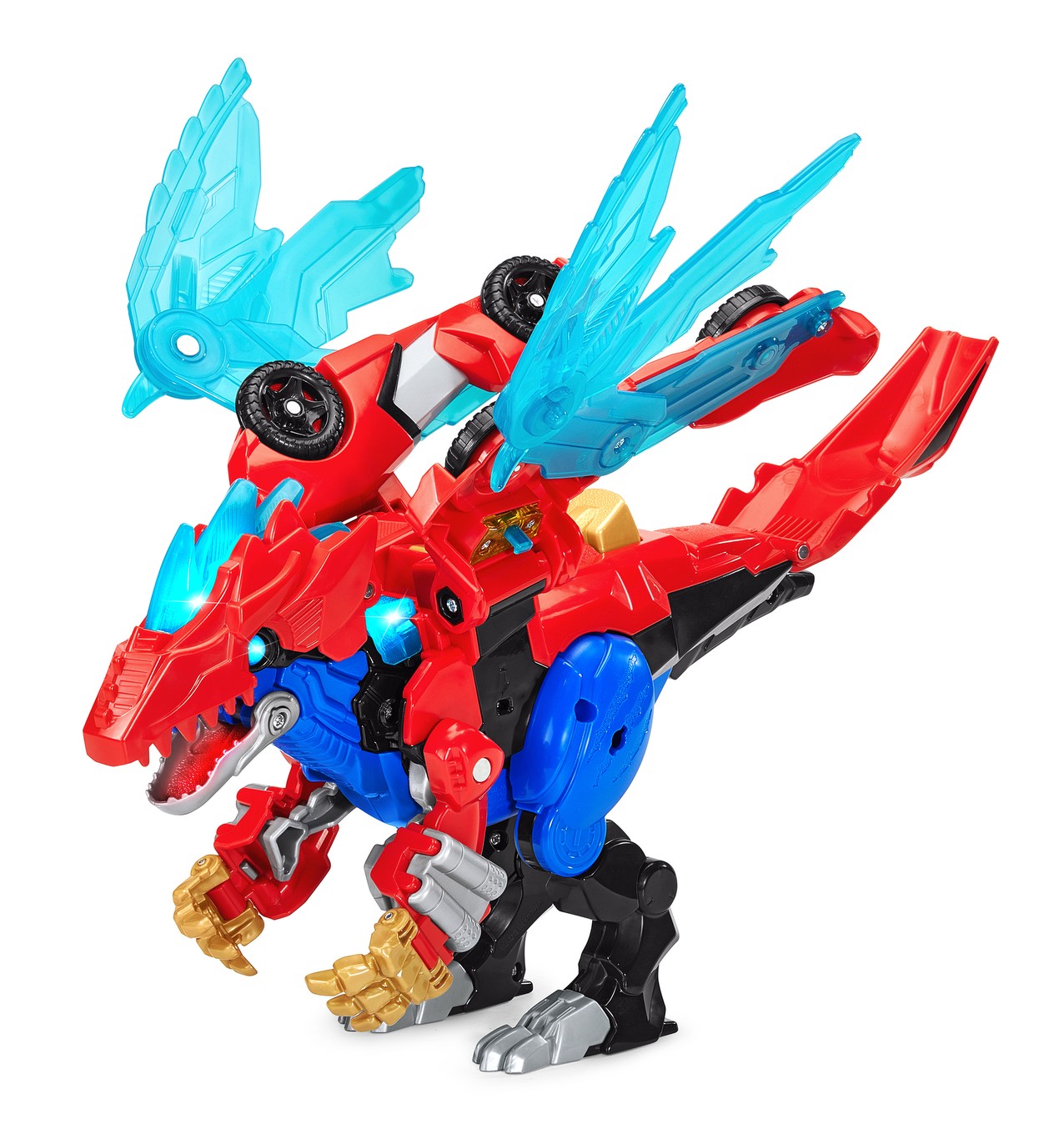
Switch & Go Dinos Armour Up Dragon T-Rex

Developmental Benefits

Motor Skills
Motor Skills
Creative Play
Creative Play
Imitative Play
Imitative Play
Imaginitive Play
Imaginitive Play

Developmental Benefits

Switch & Go Dinos Armour Up Dragon T-Rex

Motor Skills
  • Encourages fine motor skill development.
  • An infant’s growth and development in the first year of life is rapid. Many movements that young babies make are in preparation for the next stage of their development. When young babies watch a mobile they are constantly moving their head, arms, legs and even their mouths in response to the movement of the toy. Sound and movement attract a baby’s attention; if a toy is placed almost within reach of babies their movements become more animated. Bath toys provide opportunities to develop and use motor skills to great effect. For example, a young baby has greater control over their leg movements than their arms. You will often see young babies in a bath reaching with their legs towards a floating toy and kicking. All these movements strengthen muscles in readiness for the next stage - walking.
    As babies develop they become more adept at grasping objects. Young infants learn to grasp an object, for instance a cube. The grasping, at first, is quite clumsy but through repetition, and across time, infants become adept at grasping and develop fine motor skills. Infants first use the ulnar grasp where their fingers close against the palm when trying to hold an object. Within another month they are able to move the object from hand to hand. After the first year, infants adopt the ‘pincer grasp’ where they use their thumb and index finger to grasp even very tiny objects. Shape sorters help infants to fine tune their visual perception and hand coordination. Soon infants are building towers with two cubes; this also requires fine coordination skills. As the child grows computer games have been shown to help with hand and eye coordination. Spatial skills can also be enhanced when playing games that require concentration, quick responses and finely tuned motor skills.
Creative Play
  • Use imagination in a variety of ways and contexts to communicate ideas
  • When children engage in creative play they are showing that they have the ability to produce something new and original. Children benefit from opportunities where they are free to use their imagination and explore. In order for creative play to occur children need to be in an environment that is rich in stimulation. Curiousity will drive children to take part in creative play.
    Creative play is different from other forms of play; it enables children to develop confidence in their own abilities as they begin to think and work independently. Games and activities that provide choices and also a number of alternative solutions encourage a certain amount of risk-taking. Games with alternative answers can lead children to think creatively and differently. Children need encouragement to play and think creatively. Opportunities to engage in creative play boost children’s confidence and enable them to come up with better ideas. Children benefit from the knowledge they gain through creative play.
Imitative Play
  • Copying observed action encourages social and emotional skills.
  • Imitation begins very early in an infant’s life. Young children learn socially from older children and adults by copying them. Imitative play is a fundamental part of learning; young children watch adults and then copy them extensively. Throughout their early years children are learning to adapt to the cultural world into which they have been born. Imitative play allows children to experiment with the cultural tools and behaviour that they have observed. Children try to use laptops, phones and any other electronic device available to them because they have seen adults using and interacting with these devices. Young children’s manual dexterity and hand and eye coordination is well adapted for using mobile phones and other devices. Children can benefit from having replica items available, such as an infant laptop or an imitation mobile phone. These electronic items can enhance manual skills, hand and eye coordination and spatial skills.
    Imitative play requires children to observe and copy other’s behaviour. Sometimes children watch another child performing an action but don’t copy the action immediately. Lots of imitative play occurred in our nursery school study where we observed children playing with VTech toys. Children learn through observing and copying others. Young children watch other children and observe the consequences of actions without having to perform the actions themselves. This can help with social and also motor skills. A young child in our nursery study watched another child press a button on a toy to play some music and then jig up and down. After wandering off the young child who had observed the jigging returned to the toy pressed the button and began to jig up and down to the music. Children learn from each other as they play. Imitative play allows for lots of repetition which is also a valuable learning activity.
Imaginitive Play
  • Imagination and exploration through interaction with characters.
  • Children’s imagination is active from an early age. Imaginative play has links to what psychologists call ‘social pretend play’. Young children pretend or imagine that, for instance a wooden block is a cake and they carefully ‘cut’ it. A large proportion of pretend play tends to be social. Imaginative play begins when infants play and pretend with adults. As young children develop they begin to try to engage other children in social pretend play. Young children in nursery benefit from engaging in imaginative play. It helps them to begin to understand that other children think differently to them and have different ideas.
    Children can engage in imaginative play with other children where they have agreed on a story or scenario that they want to act out. Young children playing with toys use their imagination to invent scenarios and play out the consequences. They can use characters to explore scenarios and act out scripts such as going shopping or bedtime. Imaginative and social pretend play is beneficial for children as it allows them to explore different ways of viewing the world. Children who use their imagination when playing with other children are increasing their social competence and their understanding of other people. In a study where we observed children playing in a nursery we found that young children engaged in imaginative play, often using the toys in unexpected ways. Children’s imagination benefits from the opportunity to play with all types of toys.
Best for ages:
3 to 8 Years
Highlights
Hear the rumble with Thunder the T-Rex and a super-fast Race Car!
Description
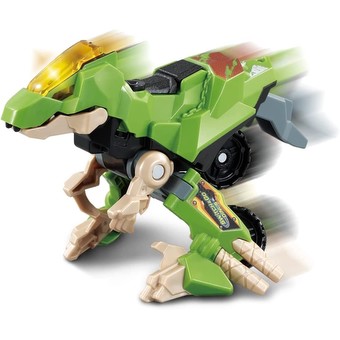
Hear the rumble with Thunder the T-Rex and a super-fast Race Car. Play with each one separately or get boosted by merging the dynamic duo to create a Powerful Dragon in a few simple steps. Soar through the skies with exciting sound effects, phrases and lights. Let’s fly! Move the dragon’s arms to gnash his sharp teeth and press the button to flap his powerful wings. Build a Switch & Go world with more transforming creature vehicles (each sold separately).

Recommended Products

This is a carousel. Use Next and Previous buttons to navigate. Or, jump to a slide by selecting one of the thumbnails.

  • Switch & Go Dinos Rush the Velociraptor
    Switch & Go Dinos Rush the Velociraptor
    Ages 3 to 8 Years
  • Switch & Go Dinos Riot the T-Rex
    Switch & Go Dinos Riot the T-Rex
    Ages 3 to 8 Years
  • Smash & Crash Smash the T-Rex
    Smash & Crash Smash the T-Rex
    Ages 3 to 8 Years
  • Switch & Go Dinos 1-Click Burnout the Velociraptor
    Switch & Go Dinos 1-Click Burnout the Velociraptor
    Ages 3 to 8 Years