This site uses cookies to store information on your computer.

Some of these cookies are essential, while others help us to improve your experience by providing insights into how the site is being used. For more detailed information on the cookies we use, please see our Cookie Policy.

Home
»
Others
»
Stitch Secret Safe Diary
3-6
YEARS

This is a carousel. Use Next and Previous buttons to navigate. Or, jump to a slide by selecting one of the thumbnails.

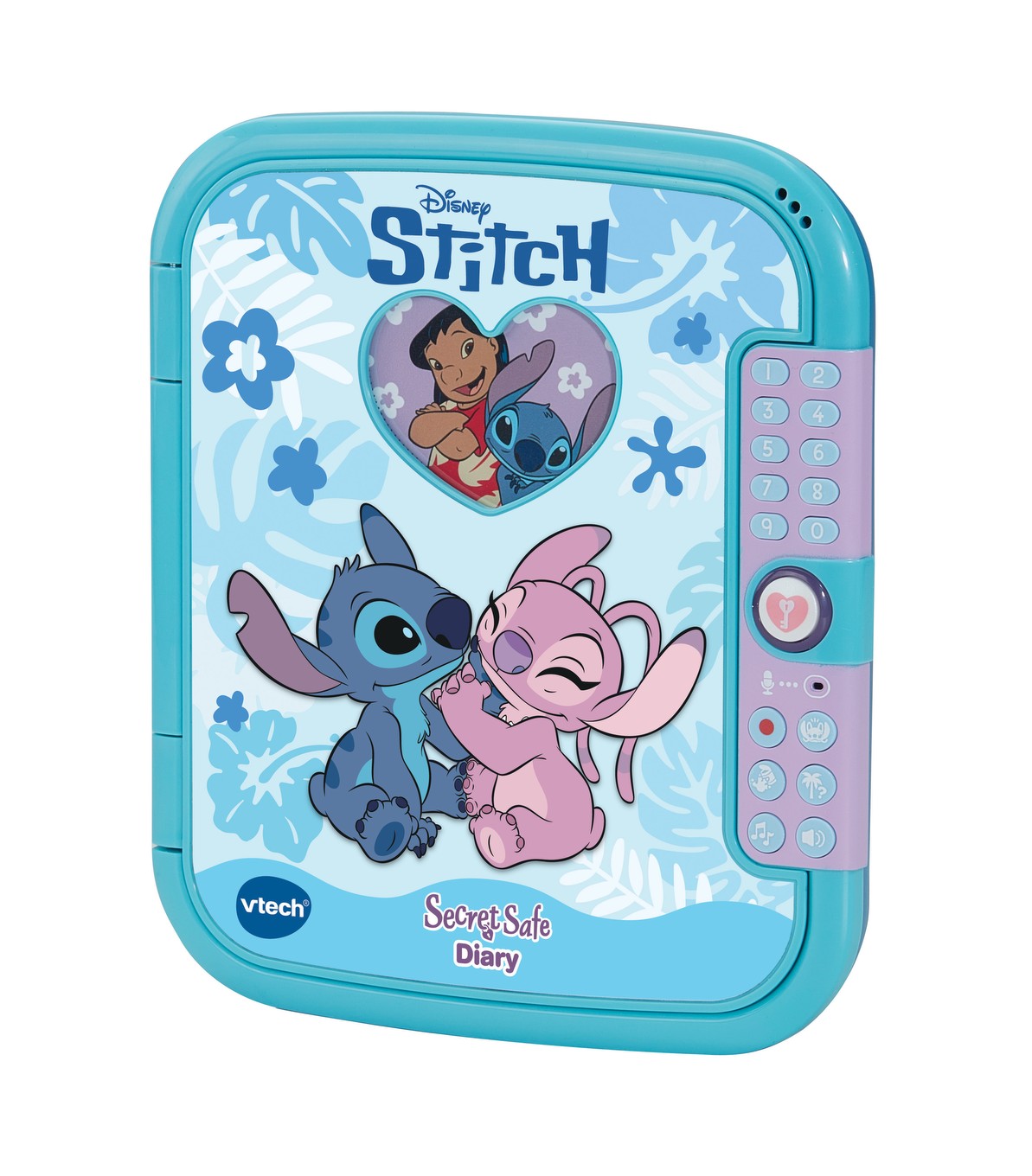
Stitch Secret Safe Diary

Developmental Benefits

Basic Maths Skills
Basic Maths Skills
Imaginitive Play
Imaginitive Play

Developmental Benefits

Stitch Secret Safe Diary

Basic Maths Skills
  • Develops counting and number identification.
  • Even young babies can discriminate between a small set of objects and a large set of objects. Young children learn to match their culture’s number words and symbols (e.g. 1, 2, and 3) to specific quantities. Research has shown that maths skills can improve with practice; young children who are given plenty of opportunity to work and play with numbers and counting will improve their basic maths skills. Counting rhymes are very popular with babies and young children and teach them basic maths concepts in a fun way. A young child may make mistakes when learning to count (e.g. missing out the number 6 when counting 10 bricks). But this young child is still demonstrating the basic maths ability; linking number words to actual numbers, realising that each item can only have one number word, and that the numbers have a sequence. Number games, learning about sequences and singing counting rhymes all help to enhance children’s basic maths skills.
    Repetition is also important, for instance, singing counting rhymes over and over again gets babies used to number words and their sequence. Toys that count as babies, for instance, place bricks in a slot and computer games that present children with fun maths problems are also useful learning tools. Play and practice with numbers is fun for babies and is essential for the development of young children’s understanding of quantity.
Imaginitive Play
  • Imagination and exploration through interaction with characters.
  • Children’s imagination is active from an early age. Imaginative play has links to what psychologists call ‘social pretend play’. Young children pretend or imagine that, for instance a wooden block is a cake and they carefully ‘cut’ it. A large proportion of pretend play tends to be social. Imaginative play begins when infants play and pretend with adults. As young children develop they begin to try to engage other children in social pretend play. Young children in nursery benefit from engaging in imaginative play. It helps them to begin to understand that other children think differently to them and have different ideas.
    Children can engage in imaginative play with other children where they have agreed on a story or scenario that they want to act out. Young children playing with toys use their imagination to invent scenarios and play out the consequences. They can use characters to explore scenarios and act out scripts such as going shopping or bedtime. Imaginative and social pretend play is beneficial for children as it allows them to explore different ways of viewing the world. Children who use their imagination when playing with other children are increasing their social competence and their understanding of other people. In a study where we observed children playing in a nursery we found that young children engaged in imaginative play, often using the toys in unexpected ways. Children’s imagination benefits from the opportunity to play with all types of toys.
Best for ages:
3 to 6 Years
Highlights
Write down all of your secret thoughts and keep them safe with the Disney Stitch Secret Safe Diary!
Description
Write down all of your secret thoughts and keep them safe with the Disney Stitch Secret Safe Diary! Create your very own 4-digit passcode to protect all your notes. Includes a 60 page notebook, pen and a secret compartment. Features voice recording, voice changing effects, maths games and a selection of playful melodies that Stitch would love to Hula dance to! Includes 10 playful melodies and teaches maths, music, memory, creative play and problem-solving.

Recommended Products

This is a carousel. Use Next and Previous buttons to navigate. Or, jump to a slide by selecting one of the thumbnails.