This site uses cookies to store information on your computer.

Some of these cookies are essential, while others help us to improve your experience by providing insights into how the site is being used. For more detailed information on the cookies we use, please see our Cookie Policy.

Home
»
Others
»
Secret Safe My Style Box
6+
YEARS

This is a carousel. Use Next and Previous buttons to navigate. Or, jump to a slide by selecting one of the thumbnails.

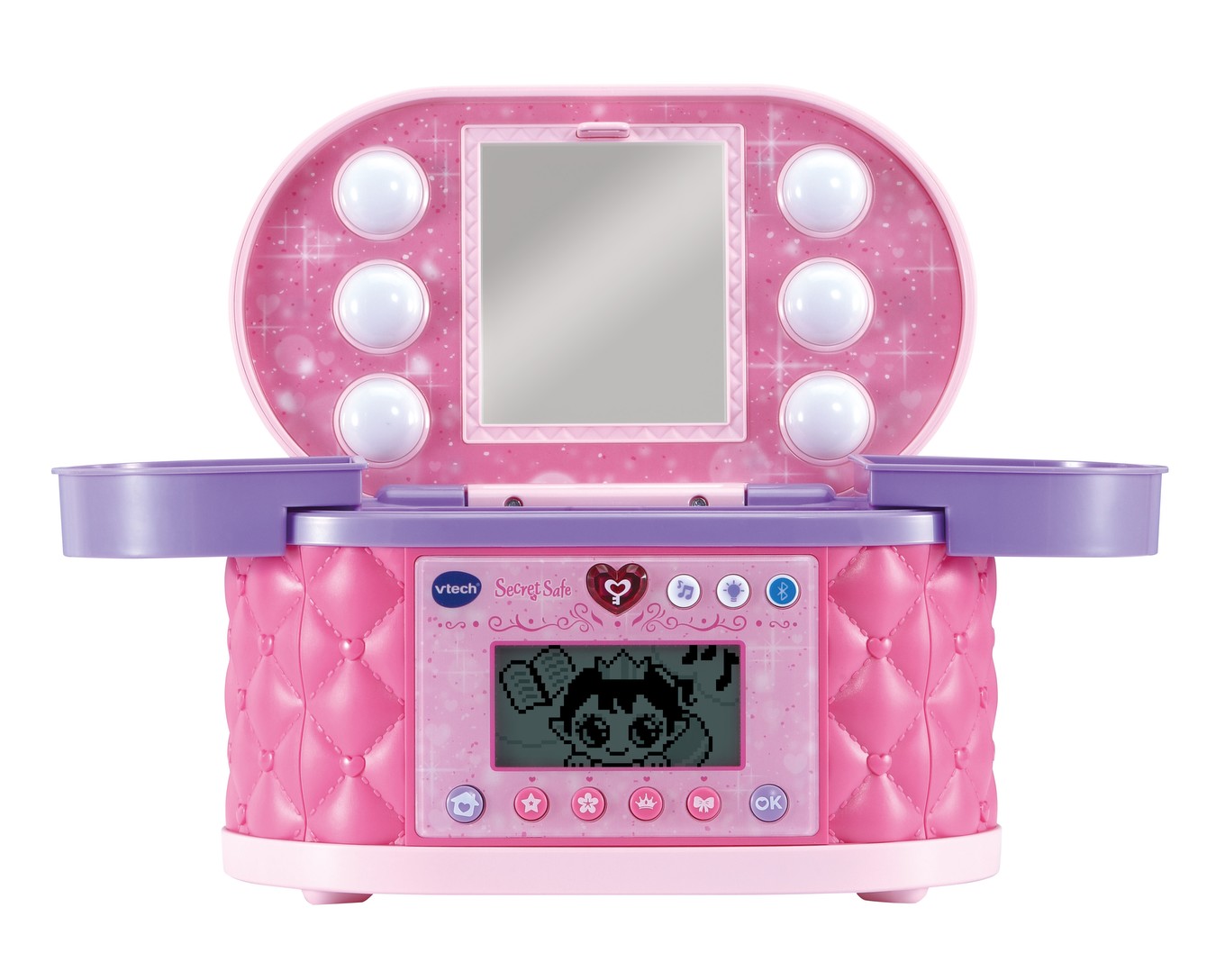
Secret Safe My Style Box

Developmental Benefits

Cognitive Development
Creative Play
Creative Play
Imitative Play
Imitative Play
Independent Play
Independent Play

Developmental Benefits

Secret Safe My Style Box

Cognitive Development
  • Stimulates critical thinking through memory and logic games.
  • An infant’s thinking skills are influenced by physical activity. Cognitive development is the change in abilities such as attention, memory, problem solving and language. Research has shown that infants’ thinking skills develop as they act on the world with their eyes, ears, hands, feet and mouth. Babies learn about the world when they reach, crawl, put objects in their mouths, and drop or bang toys to make a noise. These interactions with the physical world enable babies to begin to understand their surroundings. For example, placing an interesting toy just out of reach of babies stimulate their interest and encourages them to move.
    As the child grows and develops the brain changes in response to the child’s interaction with the world. Learning about the world through play strengthens connections in the brain; this enables infants and children to attain a greater understanding of their surroundings. Cognitive development can be a social activity; adults help infants and children to understand more about their world by presenting them with games and problems that stimulate their thinking and expand their knowledge base. An infant’s and child’s interactions with objects and people, and the consequent changes in the brain, are the building blocks of development.
Creative Play
  • Use imagination in a variety of ways and contexts to communicate ideas
  • When children engage in creative play they are showing that they have the ability to produce something new and original. Children benefit from opportunities where they are free to use their imagination and explore. In order for creative play to occur children need to be in an environment that is rich in stimulation. Curiousity will drive children to take part in creative play.
    Creative play is different from other forms of play; it enables children to develop confidence in their own abilities as they begin to think and work independently. Games and activities that provide choices and also a number of alternative solutions encourage a certain amount of risk-taking. Games with alternative answers can lead children to think creatively and differently. Children need encouragement to play and think creatively. Opportunities to engage in creative play boost children’s confidence and enable them to come up with better ideas. Children benefit from the knowledge they gain through creative play.
Imitative Play
  • Copying observed action encourages social and emotional skills.
  • Imitation begins very early in an infant’s life. Young children learn socially from older children and adults by copying them. Imitative play is a fundamental part of learning; young children watch adults and then copy them extensively. Throughout their early years children are learning to adapt to the cultural world into which they have been born. Imitative play allows children to experiment with the cultural tools and behaviour that they have observed. Children try to use laptops, phones and any other electronic device available to them because they have seen adults using and interacting with these devices. Young children’s manual dexterity and hand and eye coordination is well adapted for using mobile phones and other devices. Children can benefit from having replica items available, such as an infant laptop or an imitation mobile phone. These electronic items can enhance manual skills, hand and eye coordination and spatial skills.
    Imitative play requires children to observe and copy other’s behaviour. Sometimes children watch another child performing an action but don’t copy the action immediately. Lots of imitative play occurred in our nursery school study where we observed children playing with VTech toys. Children learn through observing and copying others. Young children watch other children and observe the consequences of actions without having to perform the actions themselves. This can help with social and also motor skills. A young child in our nursery study watched another child press a button on a toy to play some music and then jig up and down. After wandering off the young child who had observed the jigging returned to the toy pressed the button and began to jig up and down to the music. Children learn from each other as they play. Imitative play allows for lots of repetition which is also a valuable learning activity.
Independent Play
  • Games and voice prompts allow children to control the pace.
  • Early play in infants tends to be solitary or takes place alongside other children. Young children learn how to interact with other children through play but they can also explore and learn independently. The initial play experience for infants is when they begin to explore through moving and acting upon the world. Many toys offer infants the opportunity to learn more about their world. Young children will sometimes act out some aspect of their lives e.g. going to the shops and then they involve their toys in these activities. These young children are playing independently but they are also reinforcing their understanding of the social world by acting out scenarios.
    Young children can consolidate their existing skills by repeating actions whilst playing a game. Learning to play independently has its benefits, for instance, children using an educational game can control their own pace. Children sometimes choose to work independently in order to build up their confidence. Toys and computer games that facilitate independent activity at the right level for the child enhance problem solving skills and increase hand and eye coordination. Although cooperative play increases during childhood, children still spend the equivalent amount of time in solitary or independent play.
Best for ages:
6+ Years
Highlights
Keep your treasures safe in this stylish dresser, featuring a pop-up cover, passcode lock, six make-up lights, and a colour-changing display. With Bluetooth, FM radio, and a carry handle, its perfect for on-the-go fun.
Description
Keep your special treasures safe and sound with this super cool dresser that’s packed with awesome surprises! Lift the pop-up cover to hide away your favourite things, and lock it up with your very own secret passcode! When it’s time to get ready, six bright make-up lights shine so you can see everything perfectly, and the magical colour-changing display lets you pick the mood with fun glowing effects. But that’s not all, this box is also your entertainment buddy! Connect your music with Bluetooth to play your favorite songs, switch on the FM radio for even more tunes, and take it anywhere you go with the easy carry handle. Whether you’re having a dance party in your room, getting ready for a big day, or bringing it to a sleepover, this dresser makes every moment extra fun while keeping your treasures safe!

Recommended Products

This is a carousel. Use Next and Previous buttons to navigate. Or, jump to a slide by selecting one of the thumbnails.