This site uses cookies to store information on your computer.

Some of these cookies are essential, while others help us to improve your experience by providing insights into how the site is being used. For more detailed information on the cookies we use, please see our Cookie Policy.

Home
»
Kidizoom
»
KidiZoom Fun FX Pink
3+
YEARS

This is a carousel. Use Next and Previous buttons to navigate. Or, jump to a slide by selecting one of the thumbnails.

KidiZoom Fun FX Pink

Developmental Benefits

Cooperative Play
Cooperative Play
Hand Eye Coordination
Creative Play
Creative Play

Developmental Benefits

KidiZoom Fun FX Pink

Cooperative Play
  • Encourages social skills like sharing and teamwork
  • Many toys offer the opportunity for infants and children to play cooperatively. An example of early cooperative play is when a child hands a brick to another child who is building a tower. More complex types of cooperative play, such as social pretend play where children adopt roles, often occurs between two children who are friends. But cooperative play can happen between children who have never met before. This type of cooperative play can often be observed at the Baby Show where a number of infants and young children play cooperatively together with toys on the VTech stand. Young children’s cooperative and social skills are monitored by adults; parents, nursery assistants and teachers encourage cooperative play as it enhances social skills such as caring, sharing, helping and working together. Sometimes young children want to control a toy and don’t want to let other children play. At this point children benefit from an adult’s intervention and encouragement to share.
    Cooperative play means that children are working towards a shared goal whether this is building a tower or engaging in social pretend play. Toys and games can facilitate cooperative play and fun activities become more engaging when more than one child is playing. Cooperative play benefits young children as it prepares them for cooperative learning in the classroom. There is a strong emphasis on children working together during lessons to achieve shared goals.
Hand Eye Coordination
  • Aiming and concentrating on a target improves hand/eye coordination.
  • Humans have highly developed manual dexterity skills that distinguish them from any other species on this planet. This manual dexterity emerges during the infant’s first year and, with plenty of opportunities to manipulate and play with toys and objects, becomes a highly tuned ability. Babies will reach and grasp for objects in an uncoordinated manner from an early age. As they begin to gain control over their movements infants succeed in reaching for and grasping toys. The first attempts by babies to grasp toys in their hands involve using the palm of their hand with all their fingers around the object. As development occurs through physical maturation and plenty of opportunities to play with toys, grasping becomes more sophisticated. The use of the opposable thumb and index finger allows infants to pick up very small objects in what is termed a ‘pincer grasp’. This finely tuned motor skill emerges at the end of first year of life.
    The development of hand and eye coordination skills continues throughout childhood where opportunities to play games that require children to manoeuvre objects, build tall towers or hit targets on a computer screen facilitate the development of finely-tuned hand and eye coordination.
Creative Play
  • Use imagination in a variety of ways and contexts to communicate ideas
  • When children engage in creative play they are showing that they have the ability to produce something new and original. Children benefit from opportunities where they are free to use their imagination and explore. In order for creative play to occur children need to be in an environment that is rich in stimulation. Curiousity will drive children to take part in creative play.
    Creative play is different from other forms of play; it enables children to develop confidence in their own abilities as they begin to think and work independently. Games and activities that provide choices and also a number of alternative solutions encourage a certain amount of risk-taking. Games with alternative answers can lead children to think creatively and differently. Children need encouragement to play and think creatively. Opportunities to engage in creative play boost children’s confidence and enable them to come up with better ideas. Children benefit from the knowledge they gain through creative play.
Best for ages:
3+ Years
Highlights
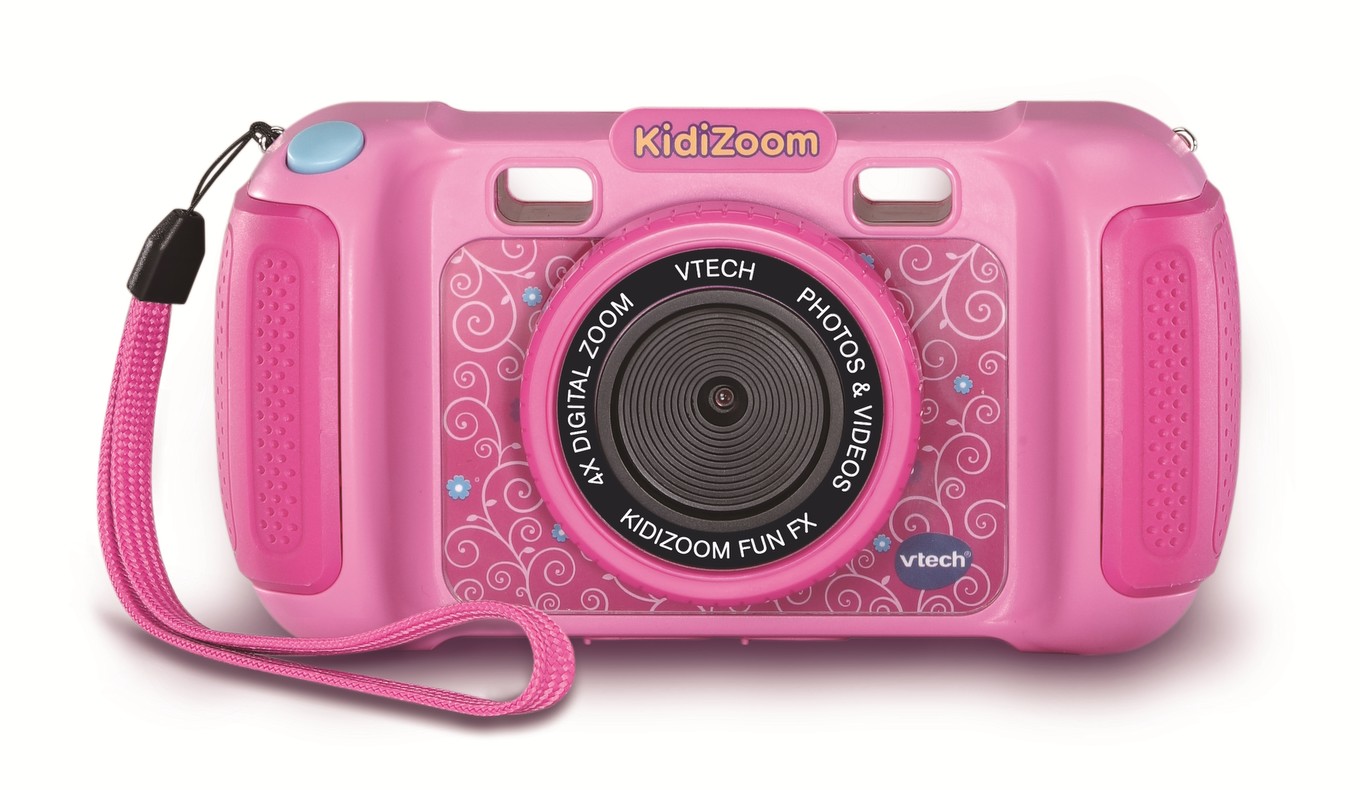
Snap, create and play with the KidiZoom Fun FX by VTech! Capture photos and videos, add fun effects, enjoy games, and unleash creativity wherever you go.
Description
Capture, create and play with the KidiZoom Fun FX by VTech! Kids can take photos and videos, flip the rotating lens for fun selfies, and explore over 50 creative photo effects. They can personalise every picture with stickers, frames, collages, comic effects and animations, then record silly cartoon voices for even more laughs. Packed with four built-in games, musical slideshows and a bright 2.4-inch colour screen, this kid-friendly camera is made for creative fun wherever they go. With a durable design, wrist strap and expandable microSD storage (card sold separately), it's ready for every adventure.

Recommended Products

This is a carousel. Use Next and Previous buttons to navigate. Or, jump to a slide by selecting one of the thumbnails.